
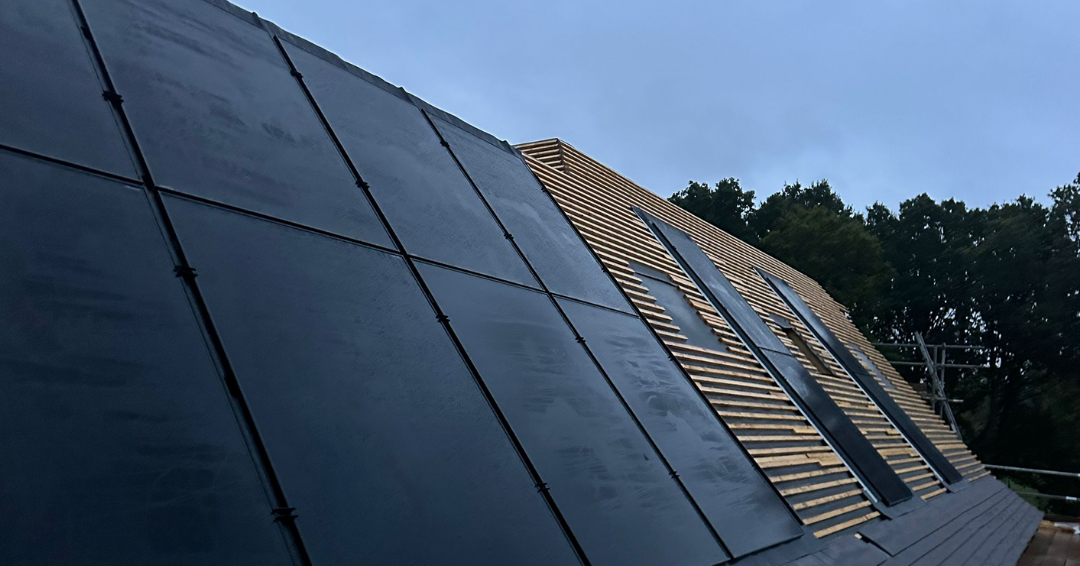
More and more businesses are looking at practical ways to manage their rising energy costs, become more sustainable and have better control over how they use electricity, and that’s why solar panels are no longer just something you see on the roofs of homes.
Energy is a significant overhead for businesses, and with electricity costs difficult to predict, finding ways to reduce reliance on the grid has become increasingly important. Meanwhile, customers and employees are paying more attention to how companies are approaching sustainability than ever before.
This is why solar is becoming more than just an environmental choice. For a lot of businesses, it’s a sensible and long-term investment that can bring financial, sustainability and operational benefits.
Rising Energy Costs Are Driving Businesses to Look for Alternatives
A sizeable chunk of a business’s regular operating costs is usually energy bills. Whether you run a warehouse, office, retail unit, manufacturing site or another commercial property, electricity isn’t really something you can simply do without. The problem that businesses are facing is that they have little control over the price they pay for electricity. Energy costs change over time, making it even harder to predict future expenditure and plan budgets with confidence.
Solar offers another option. Instead of buying all of the electricity a business typically needs from the grid, solar panels allow it to generate a portion of its own electricity right on-site. For businesses with large buildings or high electricity consumption, this can be particularly attractive.
Rather than accepting energy prices as another unavoidable business cost, solar gives companies the opportunity to have more control over where some of that electricity comes from.

How Can Solar Help Businesses Reduce Their Operating Costs?
One of the biggest reasons why businesses are considering solar is simple: it can help reduce electricity costs.
The business can directly use the electricity their solar panels generate during daylight hours. The more of this electricity a business uses on-site, the less electricity the business may need to buy from the grid. If a business mainly operates during the day, this will be particularly useful. A solar system can be generating electricity while offices are occupied, machinery is running, or when customers are walking through the doors.
Of course, we know that there isn’t a single figure that applies to every business. Potential savings depend on factors such as electricity consumption, operating hours, the size and orientation of the roof, how much roof space is available, and the wider specifics of the site.
That’s why a proper assessment is so important. A solar installation should be designed specifically around how a business uses energy, rather than taking a one-size-fits-all approach. Book your free solar consultation today to speak to our team about how solar could work for your business.
How Are Businesses Becoming More Sustainable?
Saving on energy costs is only part of the story.
Sustainability is becoming increasingly important to customers, employees and businesses themselves. People are becoming much more conscious of the environmental impact of the companies they buy from and work for, while many are setting their own sustainability targets and are actively looking for practical ways to reduce their emissions. Switching to renewable energy is one way of making meaningful progress towards those goals.
When a business installs solar panels, it’s a visible way of demonstrating that it’s taking renewable energy and its environmental impact seriously. And there’s also a reputational benefit, too. Installing solar shows that sustainability is being backed by real investment and can help businesses build trust with customers and employees, especially with a growing awareness of being eco-friendly.
Solar Is Becoming a Long-Term Business Investment
It’s fairly easy to concentrate on the initial installation costs when you first consider solar. But for businesses, it’s more useful to consider what the system could be worth over its lifetime. What we mean by that is that commercial solar installations are designed to operate for many years; decades, in fact. At Evergen, our systems are designed to last for 30 years. But your system will continue to generate electricity far past that. This means that businesses can think of solar as more of an investment in their premises and future energy needs, rather than simply another expense.
Over time, the electricity generated by the panels can help reduce the amount of energy purchased from the grid. At the same time, the business can make greater use of renewable energy generated on its own site. Also, if a company plans to remain in the same building for many years, investing in solar could become part of its wider approach to managing future costs, making this a long-term investment.
To put it simply, the question shouldn’t just be “How much does solar cost?” It should also be “What could solar be worth to our business over the lifetime of the system?”
Is Solar Right for Your Business?
We understand that every business is different, and there are factors to consider such as the condition and suitability of the building, the roof structure, shading, and orientation. But it’s also important to consider a few key questions. Does your business have suitable roof space? How much electricity does your business use? Are you looking to reduce your energy costs? Do you want to rely less on the grid? Do you have sustainability targets you’re working towards?
It may seem like a lot to consider and like a lot of questions now, but when you book your free solar consultation, our team will run through this with you and guide you every step of the way. We’ll take a look at the property, understand how the business uses energy, and determine whether solar makes sense for you and your business.
So, Why Are Businesses Switching to Solar?
Well, there isn’t just one reason. Businesses are switching to solar because it offers a combination of lower energy costs, greater energy independence, sustainability benefits and long-term value. For some companies, one of the biggest benefits is the reduction in their electricity bills. For others, it’s meeting sustainability targets or making better use of their premises. For many, it’s a combination of all of these things.
As businesses are looking for smarter ways to manage their costs and prepare for the future, solar is becoming an increasingly practical option.
So, if you’re wondering whether solar could work for your business, the best place to start is with a professional solar consultation. The right system should be designed around your business, helping you understand what solar could realistically deliver over the years ahead.

