

Solar energy has become one of the fastest-growing home improvements across the UK, and it’s easy to see why. With energy prices continuously fluctuating and homeowners looking for more ways to reduce their monthly bills, installing solar panels has never been more appealing.
Despite the ever-growing popularity of solar power, many homeowners still hesitate to make the leap. Whilst they understand the benefits of generating their own electricity and reducing their reliance on the grid, uncertainty often gets in the way. Concerns about cost, savings, the solar panel installation process, solar panel maintenance and whether solar will actually work on their home can make it difficult to take the next step.
The good news is that many of these worries come from outdated information or common misconceptions. Modern solar technology has come a long way over the past decade, making today’s systems more efficient, more affordable, and more accessible than ever before.
In this guide, we’ll explore a handful of the most common concerns homeowners have about solar panels and explain the facts behind them to help you make a more informed decision.
1. “Solar Panels Are Too Expensive”
For many people, the biggest concern is the upfront cost. Installing a solar system is a significant investment, and it’s natural to wonder whether it will actually pay for itself.
While there is an initial upfront cost, it’s important to look beyond the initial price and consider the long-term financial benefits. Solar panels generate your own clean electricity, meaning you can dramatically reduce the amount of energy you need to buy from the grid, helping to reduce your monthly energy bills year after year.
As electricity prices continue to rise, the value of producing your own energy becomes even more valuable. This means that for a lot of homeowners, they see greater savings over time than they originally had expected.
Many installers also offer financing options. These may be available so you can spread the cost into manageable monthly payments, rather than paying everything up front. Combined with lower energy bills, this can make solar a much more accessible investment for your home.
When you consider decades of lower electricity bills, potential export payments for surplus energy you’ve generated, and increased energy independence, the return on investment becomes much easier to appreciate.
2. “I’m Not Sure Solar Panels Will Work On My Home”
If you’re asking yourself, ‘Are solar panels suitable for my home?’ the answer is they probably are.
It’s easy to think that solar panels will only work on homes with large, south-facing roofs in perfect sunlight. Luckily, that’s simply no longer the case. In reality, modern solar technology is much more flexible.
Although south-facing roofs typically produce the highest output, modern solar panels are incredibly efficient, meaning east and west-facing roofs can still generate substantial amounts of electricity. Development in panel efficiency means homeowners can often achieve profound results even when roof orientation isn’t ideal.
If your roof is shaded from trees or neighbouring buildings, this can affect the performance of the panels, but doesn’t automatically rule out solar in any case. Before any installation takes place, one of our professional surveyors will assess your property’s factors, such as roof angle, shading, available space, and your household’s energy usage, before recommending the most suitable system.
We understand that every home is different, which is why bespoke system design is so important. Rather than using a one-size-fits-all approach, our experienced installers tailor each installation to maximise performance for your specific property.
Want to take the step towards sustainable energy? Book your free solar consultation today.
3. “Will Solar Panels Actually Save Me Money?”
This is perhaps the most common question homeowners ask, and it’s easy to understand why.
With the UK’s reputation for cloudy weather, many homeowners worry that their panels will barely generate any electricity. Luckily, that’s not how solar panels work. Solar panels generate electricity using daylight, rather than direct sunshine. Even on overcast days, they continue to produce power, although at lower levels than during bright sunshine. We’ll take a closer look at this in the next section.
Whenever there is daylight, your solar panels generate electricity, helping to reduce the amount you buy from the grid. The more of your own electricity you use throughout the day, the greater your savings become. You can also maximise those savings too, by adjusting your energy habits even slightly; running appliances such as washing machines or dishwashers or charging your electric vehicle during daylight hours can help maximise the value of your solar generation.
For homeowners looking at ways to make greater savings, adding battery storage can make an even bigger difference. Rather than exporting unused electricity immediately, a battery stores excess energy for use later in the evening when your household typically uses more electricity, allowing you to reduce your reliance on imported grid electricity further.
4. “Do Solar Panels Work On Cloudy Days Or During Winter?”
The UK’s weather is one of the biggest reasons why people hesitate about installing solar, but it’s also one of the biggest misconceptions.
As we briefly mentioned above, solar panels work using daylight rather than direct sunshine. As long as there is daylight, they continue generating electricity. Many people assume solar panels become ineffective during winter or stop working altogether when the sun disappears behind clouds, but this is not the case. Throughout winter, shorter days naturally mean lower electricity generation compared to summer. However, the much higher production during spring and summer months, when longer daylight hours and bright sunshine allow systems to generate significant amounts of electricity, balances out the lower generation during autumn and winter.
Rather than focusing on daily performance, it’s more useful to look at annual generation. Solar systems are designed to deliver strong performance and consistent annual savings through each season.
If you choose to install battery storage alongside your panels, you can increase your energy independence even further by storing surplus electricity generated during the day for use later when you need it most.
Take the leap today and book your free solar consultation.
5. “I’m Worried About Solar Panel Maintenance And Repairs”
When it comes to the maintenance and repairs to solar panels, there’s no need to worry. Thankfully, solar systems are remarkably low-maintenance. Because solar panels have no moving parts, there’s very little that can wear out during normal operation, making them extremely reliable over the long term.
You don’t need to worry about cleaning them, either. In the majority of cases, rainfall is often enough to wash away everyday dirt and debris, helping keep your panels operating efficiently and effectively without regular cleaning. Although if your panels become heavily soiled, professional cleaning may help maintain peak performance.
Quality solar panels typically come with long product and performance warranties, giving you confidence that your investment is protected and built to last for decades. Many modern systems also include monitoring software, allowing both homeowners and installers to identify any performance issues early, often before they become bigger problems.
For most households, ongoing maintenance is minimal compared to many other home improvements.

6. “Will Solar Panels Affect My Home’s Appearance?”
It’s understandable that homeowners want to preserve the appearance of their property and keep it looking its best. Fortunately, today’s solar panels look very different from the bulky systems installed years ago.
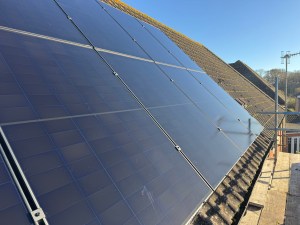
Modern panels feature sleek black frames, slimmer profiles, and cleaner designs that blend much more naturally with contemporary and traditional homes alike. Professionally installed systems look neat, symmetrical, and carefully integrated into the roof.
As renewable energy becomes more mainstream, perceptions have also changed. Many buyers now see solar panels as an attractive feature and are increasingly viewed as a positive that reflects lower running costs, environmental responsibility, and greater energy efficiency.
For prospective buyers, an existing solar installation can even make a property more attractive by offering the potential for reduced electricity bills from day one.
Get in control of your energy bills. Book your free solar survey here.
7. “The Solar Panel Installation Process Sounds Complicated”
Another common concern is that installing solar panels will involve major disruption or a lengthy building project. Some homeowners delay going solar simply because they imagine weeks of disruption, endless paperwork, and complicated planning applications.
In reality, the process is far simpler than many people expect. After an initial survey and system design, our solar installations are completed within just one day. Our experienced installers work efficiently to minimise disruption, allowing you to get back to normal as quickly as possible.
In most cases, planning permission isn’t necessary for standard residential solar installations, and your installer will advise if any additional permissions are required. Our professional installers also handle all of the administration, including system registration and any necessary grid applications where applicable, removing much of the stress from the process.
By working with our experienced installers, from your first consultation to switching your system on, the experience is often much more straightforward than homeowners imagine, with minimal disruption to everyday life.
So, What’s Stopping You From Going Solar?
It’s completely natural to have questions before investing in solar energy; many of the concerns that stop homeowners from making the switch are based on outdated information or common myths.
Modern solar systems are more efficient, more attractive, and more reliable than ever before, helping homeowners achieve long-term savings and reducing reliance on increasingly expensive grid electricity while also taking greater control of their electricity usage.
We know that every home is different, which is why the best way to understand whether solar is right for your home is through a professional assessment. A solar survey will identify exactly how suitable your property is, estimate your potential savings and recommend a system that’s designed around your home and energy needs.
If you’ve been considering solar but have been held back by questions, now is the perfect time to find out what’s possible. Request a free solar survey, and discover how solar could work for your home.

