
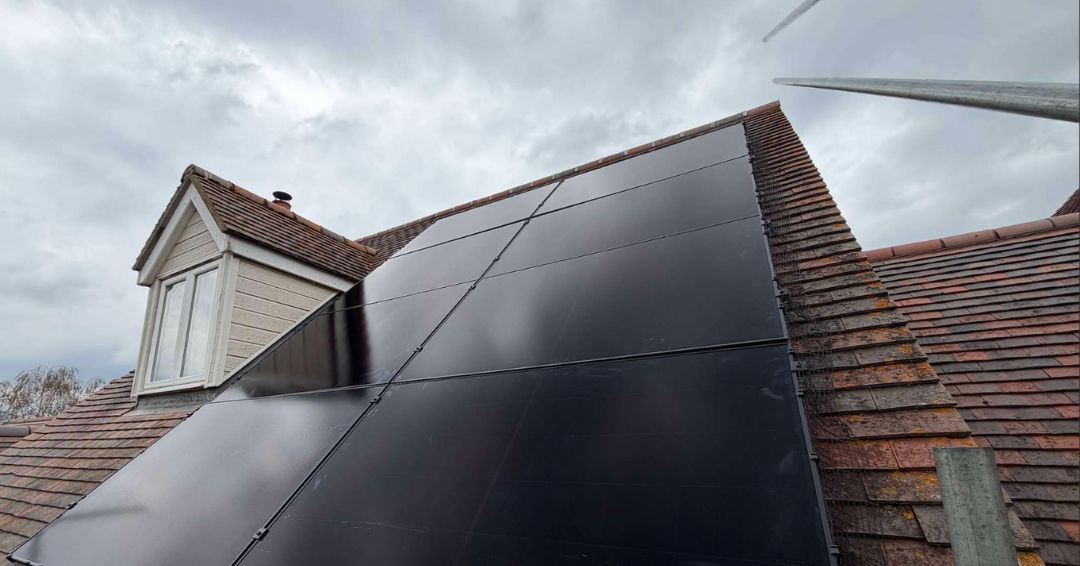
You may have come across the phrase ‘solar self-consumption’ before, but you may be wondering what it means. It might sound a little technical at first, but the idea behind it is really quite simple.
To put it simply, solar self-consumption is the amount of solar energy your panels generate used directly in your own home, rather than sending it back to the grid.
But why does this matter, and how can you make the most of the electricity your solar panels produce? In this blog, we’ll explain what solar self-consumption means, how you can increase it, and why adding battery storage could make a real difference.
What Does Solar Self-Consumption Mean?
As we touched on above, solar self-consumption is essentially the amount of electricity generated by your solar panels that you use directly in your home. For example, imagine your solar panels are busy generating electricity on a bright, sunny afternoon. If you’re using your appliances or maybe charging an electric vehicle at the same time, you can use the solar electricity your panels are producing rather than buying electricity from the grid. That’s solar self-consumption.
Any electricity your home doesn’t use can either be exported to the grid, or if you have a solar battery, it can be stored for use later.
You’ll most probably hear the term when discussing or researching solar panel efficiency, energy bills and battery storage. It can be particularly useful for homeowners because the more of your own solar energy you use, the less electricity you need to buy from your energy supplier.
And of course, with electricity prices continuing to be a concern for many households, making better use of the energy your solar panels are busy generating right on your rooftop can be a really smart way to get more from your investment.
Thinking about solar panels for your home? Book your free solar consultation with our team to find out how much you could generate and how you could make the most of it.
How Can You Increase Solar Self-Consumption?
The good news is that there are several really simple ways to increase the amount of solar energy you use at home.
- Use more electricity during the day
Solar panels generate the most electricity during daylight hours. So, if you’re at home during the day, try running appliances when your panels are producing energy.
- Charge your EV with solar energy
Drive an electric vehicle? Charging it during the day can be a really great way to use more of your solar electricity. Instead of exporting excess electricity to the grid, with the right solar and EV charger set-up, you can put it towards powering your next journey.
- Consider a solar battery
And finally, one of the most effective ways to increase solar self-consumption is by adding battery storage. Rather than exporting any surplus solar electricity during the day, a battery can store it so you can use it later in the evening when your panels aren’t generating.
Book your free solar consultation today to find out what’s possible for your home.
What are the Benefits of Solar Self-Consumption?
There are several reasons why homeowners may want to maximise their solar self-consumption. Let’s take a look at a few of those reasons below:
Lower electricity bills: Using electricity that’s been generated by your own solar panels means you don’t need to buy as much electricity from the grid, and therefore lower your bills.
Better use of your solar panels: If you’ve invested in a solar panel system for your home, it makes perfect sense to use as much of the electricity they generate as possible.
Less reliance on the grid: Generating and using your own electricity not only feels like a great accomplishment, but it can also reduce your reliance on energy suppliers and the grid. It can also protect you from future price hikes.
Make better use of excess solar energy: Without battery storage, any unused electricity your panels generate may be exported to the grid. While you may be able to receive payment for exported electricity, using it yourself can often provide greater value.
Greater energy independence: Solar self-consumption gives you much more control over where your household electricity comes from and ultimately, how you use it.
How do Solar Panels Contribute Towards Solar Self-Consumption?
When it comes to solar self-consumption, solar panels are really at the heart of it. They generate electricity from daylight, which is then converted to usable energy you can use to power your home.
When your panels are producing electricity, your home will generally use that power first. If perhaps your home needs more electricity than your panels are currently generating, the additional electricity can come from the grid.
If your panels are busy generating more electricity than your home currently needs at that time, the surplus can then be exported to the grid or stored in a battery, depending on your setup and system.
This is why a properly designed system to suit your home and energy needs is so important, as it will help you generate a useful amount of electricity for your household and make better use of the available roof space.
Solar panels can also work well alongside other technologies, such as battery storage, EV chargers and smart energy management systems, creating a more flexible and sustainable home energy setup.
Ready to see whether solar panels could work for your home? Get in touch to book your free solar consultation.
Enhance Solar Self-Consumption with Battery Storage
Solar self-consumption is all about using and making the most of the electricity your solar panels generate, and battery storage takes things a step further.
One of the main challenges with solar energy is that your panels generate electricity during the day, when many homeowners are typically out of the house. This means most of the electricity usage for a typical household takes place in the morning and evening, when your panels may not be generating as much. This is where a solar battery can help to bridge that gap.
For example, your panels could generate more electricity than your home needs at midday. Instead of sending that excess electricity to the grid, your battery can store it. Then, later in the day, when the sun has gone down and your household starts to use more electricity, you can draw on the energy stored in your battery.
This can significantly increase the amount of your solar electricity that you use yourself.
Battery storage can be particularly useful if you’re not home during the day, as you may otherwise miss the opportunity to use much of the electricity your panels generate.
Of course, the right battery and system size will depend on your home, energy usage and solar panel system. That’s why it’s worth getting professional advice with our free solar consultations before choosing a system.
Make the Most of the Solar Energy You Generate
Solar self-consumption is ultimately about making the most of your own solar electricity. By using more energy during daylight hours, charging an EV with solar power, and adding battery storage, you can increase the amount of solar energy your household uses directly.
If you’re considering solar panels, booking a free solar consultation is an excellent place to start. Discover how solar could work for your home, and the savings you could make.

