
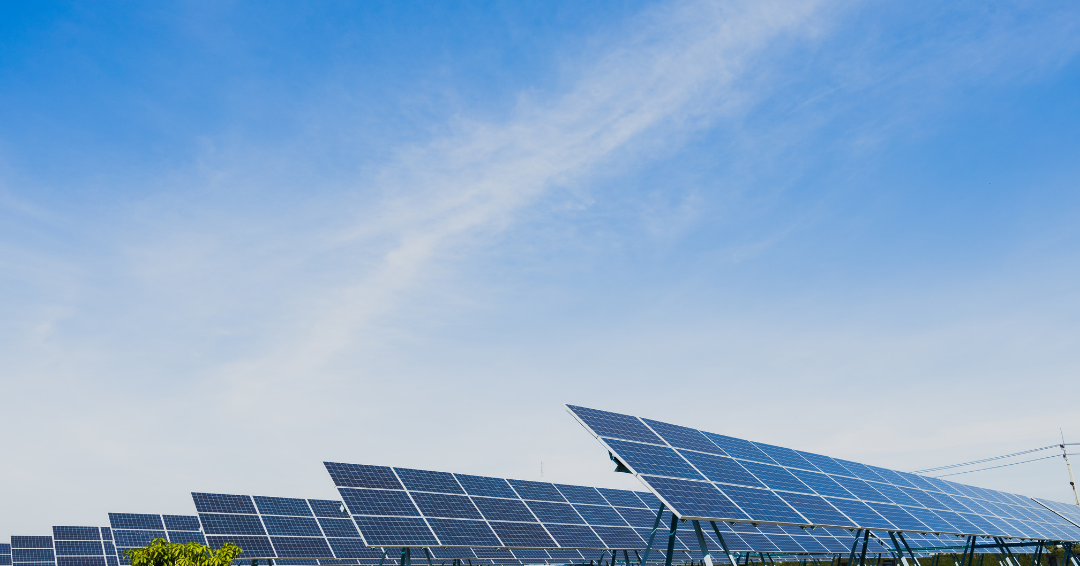
You may have heard solar farms mentioned on the news, and if not, you’ve probably spotted rows of solar panels while driving through the countryside. But what actually is a solar farm, and what do they exactly do?
To put it simply, a solar farm is a large area covered with solar panels that generate electricity from daylight. They’re becoming a much more popular sight across the UK’s landscape as we look for cleaner, more renewable ways to produce the electricity we use every day.
But how do solar farms work, and why are we seeing more of them popping up across the country?
Let’s take a look.
The Rise of Solar Power Across the UK
The solar revolution is still underway, with solar power quickly becoming more and more popular across the UK in recent years.
It’s not unusual to see solar panels on the roofs of homes, schools, offices, warehouses, and other buildings. More people are making the choice to generate their own electricity through solar, whilst also reducing their reliance on the grid and making better use of renewable energy. And it’s not just homeowners putting panels on their rooftops.
As well as the rise in rooftop solar, we’re seeing more large-scale solar farms being developed in the UK, with over 1,000 already dotted across the landscape. These solar projects allow thousands of solar panels to work together and generate a large amount of electricity.
For many people, solar is an appealing option because daylight is free, renewable, and available all across the UK (even if sometimes our weather may make us think otherwise).
Thinking about solar for your home or business? Book a free solar consultation with our team to find out what could work for you.
So, What Exactly is a Solar Farm?
As we mentioned above, a solar farm is essentially a large collection of solar panels that have been installed on a suitable area of land. Typically built up of hundreds, or sometimes even thousands, of panels arranged in rows.
When daylight reaches the panels, they generate electricity. This electricity is then converted into a usable form for the electricity network before it’s sent to the grid. The electricity generated by a solar farm can then be used by properties connected to the network.
Solar farms are typically located in areas where there is enough suitable land, good sunlight and, of course, access to the electricity grid. They can normally be found in rural areas where there is enough space for a large number of panels.
Why Do We Need Solar Farms?
Put simply, the UK needs a lot of electricity. And as we’re moving towards using more electric cars, heat pumps and other electrical technology, that demand is only expected to increase, and solar farms are one way of helping to meet that demand.
Rather than burning fossil fuels, solar panels generate electricity from daylight. Once a solar farm is up and running, the panels continue generating electricity whenever there is enough daylight. They produce no emissions and are powered by a renewable source (the sun), meaning they’re much better for the environment compared to coal, oil and gas.
As the country continues to move towards renewable energy and the target of achieving net zero by 2050, solar farms are likely to play an increasingly important role in the energy landscape.
What Are the Benefits of Solar Farms?
There are several reasons why solar farms are becoming more popular.
Renewable energy
Perhaps the biggest benefit is that solar power is renewable. As we’ve already mentioned, the sun provides the energy needed to generate electricity, meaning we’re not using up a finite fuel source in the process.
Lower-carbon electricity
Solar power can help to reduce the need for electricity generated using fossil fuels. This makes it a very important part of the move towards a lower-carbon energy system.
Large-scale opportunity
Solar farms can be developed at a large scale, allowing for a significant amount of renewable electricity to be generated from just one site.
Making use of available land
Solar farms can be carefully designed around the surrounding environment, with opportunities to include wildflower areas, hedgerows and other measures that can support biodiversity.
Wondering whether solar could work for your home? Our team can help. Book your free solar survey today.
Are There Any Large Solar Farms in the UK?
Yes. In fact, there are already a number of large solar farms across the UK, with more projects being planned and developed.
Some solar farms cover vast areas, including hundreds of acres, and contain hundreds of thousands of individual solar panels.
As solar technology continues to develop and improve, we’re also seeing more projects combine solar panels with battery storage.
This can be particularly useful because solar generation naturally changes throughout the day. Batteries store some of the electricity generated and make it available when it’s actually needed.
Will Solar Farms Continue to Grow?
It certainly looks that way.
Solar power is already incredibly popular across the UK, with a record-breaking number of installations already taking place this year, and the total number of installations across the country surpassing 2 million.
As demand for electricity increases and we continue to move towards renewable energy, more solar projects such as solar farms are likely to be needed.
However, that of course doesn’t mean that every open field will suddenly become a solar farm. New projects have to go through planning and take a range of factors into account, such as the local environment, landscape, wildlife and connection to the electricity grid.
But the overall direction is clear: solar is becoming a bigger part of how we generate electricity in the UK.
If you’re considering solar for your home, you don’t need to know all of the technical details before getting started. Book your free solar consultation today and a member of our team will be in touch to let you know how solar could work for you.

