

Cities are growing at an extraordinary pace, and while this growth does of course bring opportunities, it also creates challenges; from air pollution and traffic congestion, to high energy consumption and pressure on green spaces. With more people moving into urban areas, there’s a growing demand for housing, businesses are expanding, and transport and energy continue to rise.
As a result, cities across the UK and around the world are now looking for ways to become more sustainable. Solar panels are popping up on commercial rooftops, electric vehicle charging points are becoming an increasingly common sight, and clean air zones are transforming the way people travel. At the same time, smarter buildings, improved public transport and better cycling infrastructure are all helping to reshape urban life.
So, what does a greener city look like?
Solar Panels on Commercial Buildings
Offices, shops, warehouses, hotels and other commercial properties can consume substantial amounts of electricity every single day, making them a significant source of energy demand. Therefore, commercial buildings are an important part of the transition towards renewable energy.
One increasingly popular solution is to make better use of the space that’s already available on rooftops. Solar panels on commercial buildings can generate clean electricity right on site, helping businesses produce a portion of their own energy rather than relying entirely on electricity from the grid
This brings several benefits for businesses. By generating renewable electricity, this can help reduce businesses’ reliance on conventional energy sources and potentially lower electricity costs over time. It may also help organisations make progress towards their sustainability targets and demonstrate a visible commitment to reducing their environmental impact.
Because they often provide large areas of unused space, commercial rooftops are particularly valuable in cities. Instead of needing additional land, solar panels can be installed where energy is already being consumed. So as businesses look for practical ways to reduce emissions, making use of these rooftops is likely to become an increasingly important part of urban energy strategies.
Solar Panels on Homes
Commercial buildings aren’t the only rooftops with the potential to support greener cities. Homes across urban areas also play an important role in the shift towards renewable energy. Even in densely populated towns and cities, rooftops in residential areas provide valuable space for solar panels, allowing households to generate clean electricity. If hundreds or even thousands of homes generate renewable energy, this can contribute to reducing carbon emissions and increasing the amount of clean energy available across the UK.
Solar panels installed on homes can therefore be seen as more than just an individual investment solely for your home. If adopted across a neighbourhood, town or city, they can form part of a much bigger shift towards local, renewable energy generation.

Ready to explore solar for your property?
Whether you’re looking to reduce your energy costs or make your home or business more sustainable, solar could be a smart investment. Book your free solar consultation today to find out what could work for your property.
What is a Clean Air Zone?
To put it simply, clean air zones are designated areas where certain vehicles may face restrictions or charges if they do not meet specified emissions standards. The basic aim is to discourage the use of more polluting vehicles and encourage drivers and businesses to consider cleaner alternatives.
A significant source of the pollution in urban areas is due to road traffic. Exhaust emissions from petrol and diesel vehicles all contribute to poor air quality, which is why more cities are introducing measures that have been designed to encourage cleaner forms of transport; and clean air zones are just one example.
For drivers, it can encourage a shift towards a lower-emission or electric vehicle. Clean air zones are not intended to solve urban pollution on their own, however. They’re part of a wider effort to improve air quality while supporting the transition towards cleaner transport.
Public Electric Vehicle Charging Points
With more motorists making the switch from petrol and diesel vehicles to electric cars, cities need the infrastructure to support them.
Public EV charging points are becoming an increasingly important feature of urban areas. They’re typically found in places such as supermarket car parks, public car parks, petrol stations, and even workplaces and residential streets, giving drivers the opportunity to charge their vehicle away from home.
Convenience definitely matters. If drivers are unsure where they will be able to charge their vehicle, or they regularly encounter unreliable or unavailable chargers, making the switch to an EV can feel slightly daunting and less appealing. That’s why a well-developed and dependable charging network can really help break down this barrier.
As cities continue to encourage cleaner vehicles, they also need to make it practical for people to actually use them, making a clear connection between EV charging and clean air zones. By expanding charging infrastructure and making EV chargers more readily available to drivers, this supports the transition to cleaner transport and can make lower-emission travel a more realistic option for a wider range of drivers.
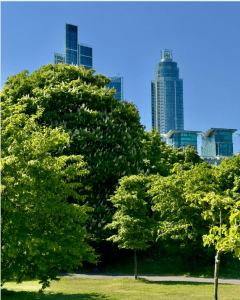
Smarter, More Energy-Efficient Cities
Creating greener cities does require more than just changing how we generate electricity or travel. The buildings themselves also have a large part to play. Modern energy-efficient buildings can use technology to reduce any unnecessary energy consumption, from smart heating systems to improved insulation. Renewable energy can also be incorporated into new developments right from the start. Solar panels, heat pumps and other low-carbon technologies can be considered as part of a building’s overall energy strategy, instead of adding them as an afterthought.
With this, it highlights an important point: there is no single solution to creating a sustainable city. Solar energy, efficient buildings, cleaner transport and intelligent technology all need to work together. To have a genuinely greener urban environment requires a whole-system approach in which different solutions complement one another.
Take the next step towards cleaner energy
From homes to large commercial buildings, solar has an important role to play in creating a greener future. Book your free solar consultation today to explore your options.
Building the Cities of the Future
The rise of greener cities is not being driven by just one technology or one policy. Solar panels, clean air zones, EV charging, public transport and green spaces all contribute to the same goal: creating an urban environment that works better for both people and the planet.
Governments, councils, businesses and communities are all increasingly recognising that the cities of our future need to be cleaner. But there is still plenty of work to do. Investing in renewable energy, cleaner transport and smarter infrastructure is not simply about responding to climate change; it’s an opportunity to rethink what our cities can be. Ultimately, it’s about reimagining how urban areas are designed and powered so that people and the planet can thrive together. At Evergen, we’re helping households throughout the country make the switch to greener, cleaner living.

