
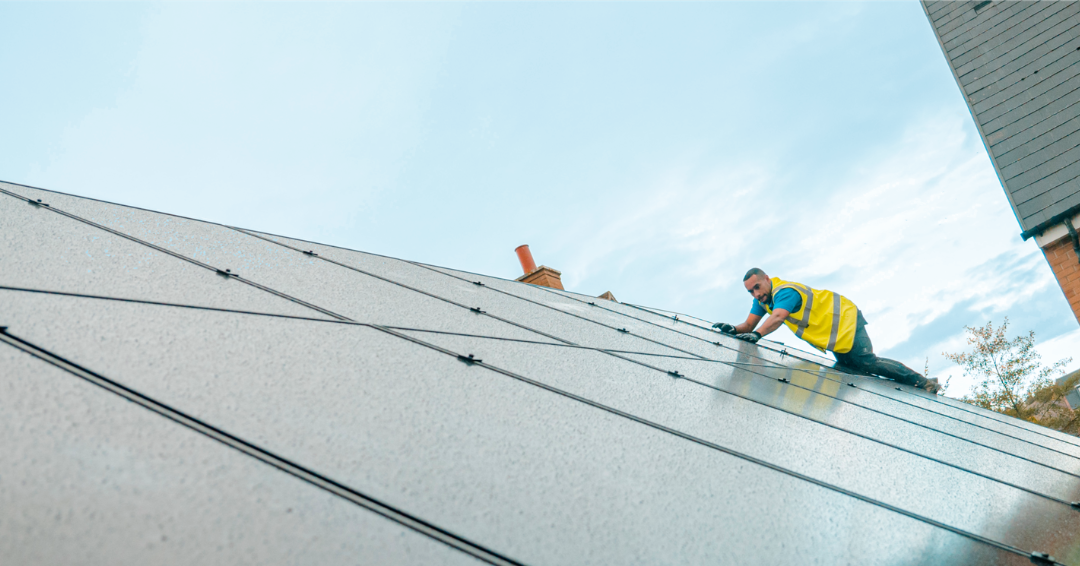
Solar panels work by capturing daylight and converting it into renewable electricity that you can use to power your home. It’s a relatively simple idea, but there is still a very common misconception that solar panels only really work if they’re installed on a south-facing roof. So what happens if your roof faces east or west? Will you miss out on the benefits of solar?
The short answer? No. Although roof orientation does affect how much electricity your panels generate, south-facing is not the only option for solar. East- and west-facing roofs can still be very effective, and in some homes they may even help produce electricity at times when it’s most useful.
Is South-Facing Really Best?
In the UK, south-facing roofs have traditionally been considered the ideal location for solar panels. Generally, this is because solar panels installed on a south-facing roof typically receive the most sunlight throughout the day, meaning the panels will produce a strong level of electricity from morning through to afternoon.
That strong all-day exposure is why south-facing roofs have normally been favoured and preferred for solar installations for many years. However, maximum annual generation is not the only thing that’s worth considering.
East- and west-facing roofs still receive plenty of sunlight. Rather than producing the highest possible output around the middle of the day, they adjust when your electricity is being generated, and that can actually be an advantage for some households.
Book your free solar consultation today. Our team of experts will carefully examine your property to determine what system works best for you and your home.
Solar on East- and West-Facing Roofs
Instead of receiving the strongest daylight around midday like south-facing roofs, east- and west-facing roofs shift solar generation towards the beginning or end of the day. That doesn’t mean they’re not suitable for solar, however. In fact, they can work very well, particularly when the system is designed around how your household uses electricity.
On a like-for-like basis, solar panels that are installed on east- or west-facing roofs may generate around 15% to 20% less electricity over the course of a year compared to a south-facing installation. However, this difference in generation isn’t as significant as it sounds. East- and west-facing systems spread generation across a longer part of the day, which can mean more of the electricity is available when you actually need it.
East and West: What’s The Difference?
East-facing panels
East-facing panels get their head start in the morning. As the sun rises, they begin generating electricity early, which could be useful for households that are active in the morning rather than the afternoon. Your panels could be producing useful electricity while you are boiling the kettle, running the washing machine, or using other household appliances.
West-facing panels
West-facing panels essentially reverse that pattern. They tend to produce less electricity in the morning, but will increase the output as the day goes on. This is useful for households where electricity is used more later in the day. Cooking dinner, charging devices, charging your EV. Depending on the time of year and weather conditions, west-facing panels can continue to produce useful electricity into the evening.
A combined east and west system
If you choose a system that’s both east-and west-facing, the panels can create a much more balanced output. The east-facing panels will produce electricity for your home in the morning, whilst the west-facing panels will take over as the day progresses. With the combination of the two, they can provide a longer window of moderate electricity generation from morning towards the end of the day.
Looking to install solar on your roof? Complete our simple and quick form today, and our team will be in touch to book your free solar consultation.
The Benefits of East- and West-Facing Roofs
There are several reasons why a system installed on an east- and west-facing roof can be a very sensible choice. Let’s take a look at a few reasons below:
More space for panels: If you can install panels on both roof sides, you may be able to fit an overall larger system. Although each individual panel may produce ever so slightly less than it would on a south-facing roof, having more panels can compensate for that difference and increase the total amount of electricity your system generates.
Higher self-consumption: One of the biggest advantages is when your solar generation matches your household’s electricity use. East-facing panels can help supply electricity in the morning, while west-facing panels can generate more later in the day. This can reduce the amount of electricity you buy from the grid, and potentially even increase the amount of your own solar power that you use directly in your home.
Making the most of electricity tariffs: If your electricity tariff has higher rates at certain times, west-facing panels can be especially useful. Their stronger afternoon and early evening generation may coincide with times when household electricity demand, and potentially electricity prices, are higher.
Solar Panels For All Roof Orientations
East, west and south-facing roofs all contribute towards generating renewable electricity that you can use to power your home, reduce your reliance on the grid and lower your home’s carbon footprint. Even where a roof is not perfectly positioned, such as a north-facing roof, there are certainly still results and certainly have benefits. Unlike east-, west- and south-facing roofs, a north-facing, well-designed solar system can still deliver worthwhile savings.
Another factor that’s important to consider is shading from trees, chimneys and neighbouring buildings. These can reduce output and can even have a bigger impact on solar performance compared to a not-so-perfect roof direction.
Find the Right Solar Set-Up with Evergen
The best solar system is not necessarily the one with a south-facing roof. What matters is how your property, roof space, shading, panel layout and household’s electricity all work together.
Whether your roof faces east, west, south, or a combination of directions, our team will survey your property and determine which solar set-up works best for your home. They’ll even evaluate shading, available space, and other factors to ensure you get the most suitable system for your property. Book your free solar consultation today to find out what solar could do for your home and bills.

