
More households in the UK are looking for ways to reduce bills and become less reliant on the grid. With energy bills still showing little sign of settling down, it doesn’t come as too much of a surprise that solar panels have become one of the UK’s most popular home improvements.
One of the questions we hear regularly is: Do I need planning permission for solar panels? Well, the good news is that, typically, if you live in the UK and do not live in a listed building or in a conservation area, then no, you do not need planning permission to have a solar panel system installed on your home. However, there are a few important exceptions, so it’s worth knowing where you stand before you do go ahead with an installation on your rooftop.
In this guide, we’ll walk you through when planning permission is required, when it isn’t, and what else you should keep in mind before you make the switch to solar.
In Most Cases, The Answer Is No
Most domestic solar panel installations fall under something called ‘Permitted Development Rights.’ So if you’re planning to install solar panels on the roof of a typical house, you most probably won’t need planning permission at all. To put it simply, the government allows certain home improvements to go ahead without homeowners having to submit a planning application first. And with the government supporting and encouraging the adoption of solar panels, the restrictions are very limited.
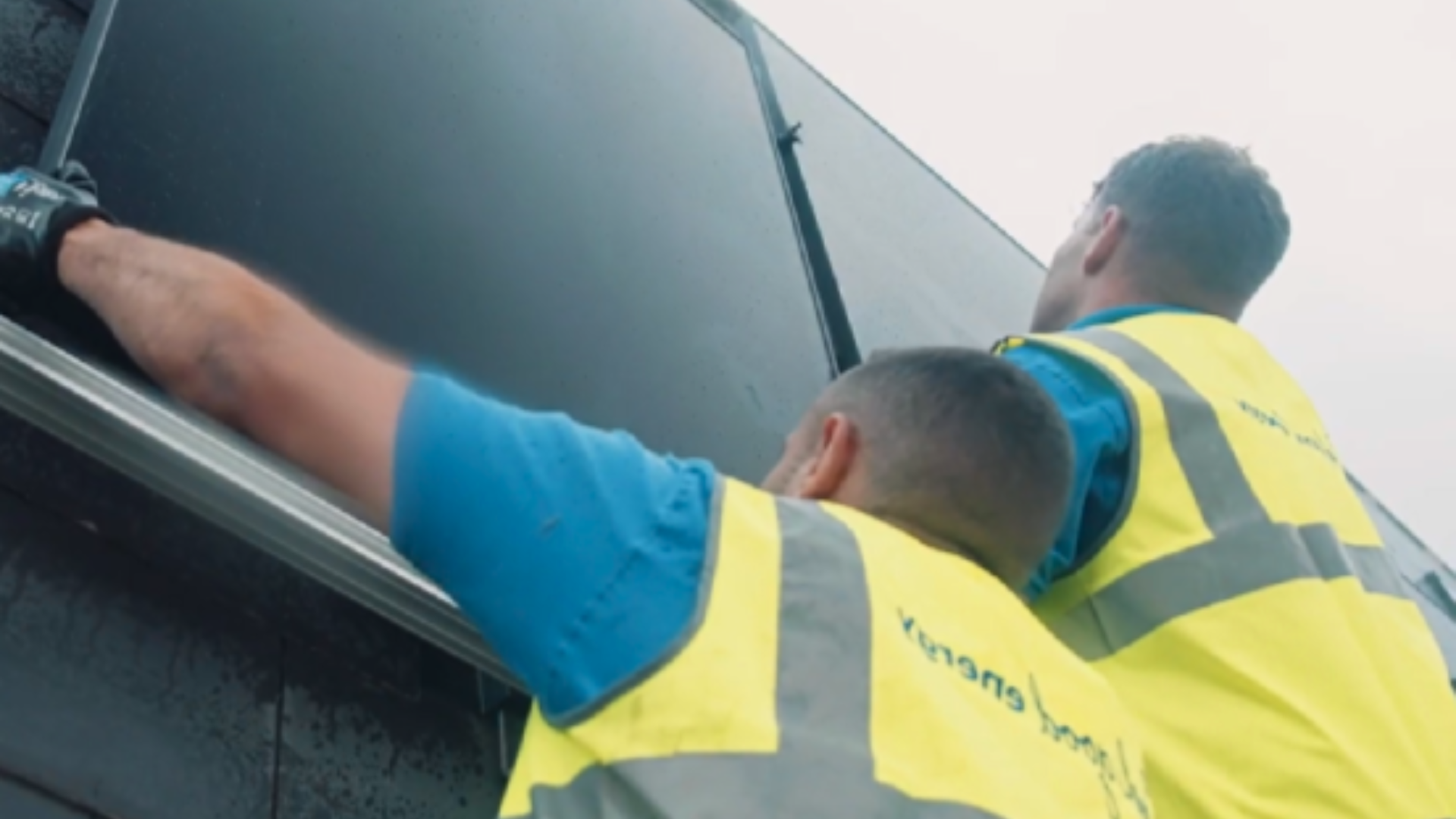
It’s one of the reasons why solar has become so popular in recent years. The process is typically so much simpler than people first expect. However, you will find there are some regulations you have to follow, but our highly knowledgeable team know exactly what they’re doing and will advise you every step of the way. They’ll handle everything, from the initial survey to the installation itself.
Of course, there are a handful of situations where planning permission is still required. But for the average home, it’s not something you need to worry about.
Want to see if solar is suitable for your home? Book in for your free solar consultation today.
What Are Permitted Development Rights?
Don’t worry, it sounds more complicated than it really is. Permitted Development Rights are simply rules put in place by the government that allow homeowners to make certain changes to their property without needing any formal planning approval.
With these rules, the government has gradually made it easier for homeowners to install renewable technologies such as solar panels as part of its drive towards cleaner energy and lower carbon emissions, provided they don’t exceed specific limits on size, location and projection. The bottom line is that the easier it is for homeowners to install solar, the more people are likely to do it.
As we briefly mentioned, there are still a few conditions attached. For example, the panels shouldn’t stick out an unnecessary amount from the roof, and the installation should be designed to have as little visual impact as possible. On pitched roofs, the panels must not project more than 20cm from the roof slope. Also, they must not sit higher than the highest part of the roof (this excludes chimneys).
Book in for your free solar consultation today. All of our systems meet the necessary guidelines from the very beginning and are cleverly designed around you and your home.
When Do I Need Planning Permission for Solar Panels?
This is where things become a little more property-specific. If your home is a listed building, you’ll almost certainly be required to obtain additional approval before installing a solar panel system. Listed buildings are protected for their architectural and historical importance, and therefore any changes to their appearance are much more tightly controlled. The same also applies if you live in a conservation area, a national park or another protected landscape. It doesn’t automatically rule out solar, but your local planning authority will almost certainly want to review the proposal beforehand.
Falling under different planning rules are ground-mounted solar panels, particularly if you’re installing a large array in your garden or on land that surrounds your property.
There are also homes that may have planning restrictions left over from previous developments or conditions that are written into the property’s deeds. Although these can be less common, they’re another reason why it’s worth checking before any installation takes place.
If you’re not sure whether you live in a listed building, then you can check via the NHLE. You can also apply for planning permission for listed and conservation buildings here.
Can I Install Solar Panels on a Flat Roof?
Yes, you can. However, flat roofs do often prompt a few extra questions, but the rules aren’t necessarily drastically different.
In many cases, solar panels can be installed onto flat roofs without planning permission as they fall under Permitted Development Rights. Although the highest part of the solar equipment must not project more than 600mm above the highest part of the flat roof, and they must be sited to minimise visual impact.
One of the biggest differences is the mounting system. Because flat roofs don’t face the sun at an angle like pitched roofs do, the panels are typically fitted onto frames that tilt them towards the sunlight. This can at times make them slightly more visible, and might be something you will have to consider if your property is overlooked or sits close to a public road.
Your roof will also need to be structurally capable of supporting the system; therefore, it’s important a proper survey is carried out. Book today for your free solar survey.

What’s the Difference Between Planning Permission and Building Regulations?
This is probably one of the most misunderstood points when it comes to solar. Just because you don’t need planning permission, that doesn’t mean you can skip the rules altogether.
Solar panel installations still need to comply with UK building regulations, which are there to ensure everything is safe and installed correctly. This includes making sure your roof is strong enough to support the system, checking that all electrical work meets current standards and ensuring the installation has been carried out properly.
This is why choosing an MCS-certified installer is one of the easiest ways to make sure everything is done correctly. Luckily, at Evergen, we’re MCS-certified, and we always work to recognised industry standards and provide the relevant certificates once the installation is complete. We always ensure every installation on our customers’ homes is done to the utmost quality and professionalism. Book your consultation today to start your journey to a greener future.
Why It’s Worth Getting Expert Advice
We know that every home and every roof is different. From the size, the angle, and orientation. Our experienced team won’t just tell you whether planning permission is required; they’ll design a system that makes the most of your roof and your budget.
We’ll also ensure that everything complies with the relevant regulations, provide all the necessary paperwork and leave you with the confidence that your system has been installed with quality. When you’re investing in something designed to last for decades, having that peace of mind is invaluable.
If you’ve been putting off installing solar on your home because you’ve been worried about planning permission, let us put your mind at ease.
The easiest way to find out where you stand is to book your free solar consultation. We’ll assess your property and explain exactly what’s required.

