
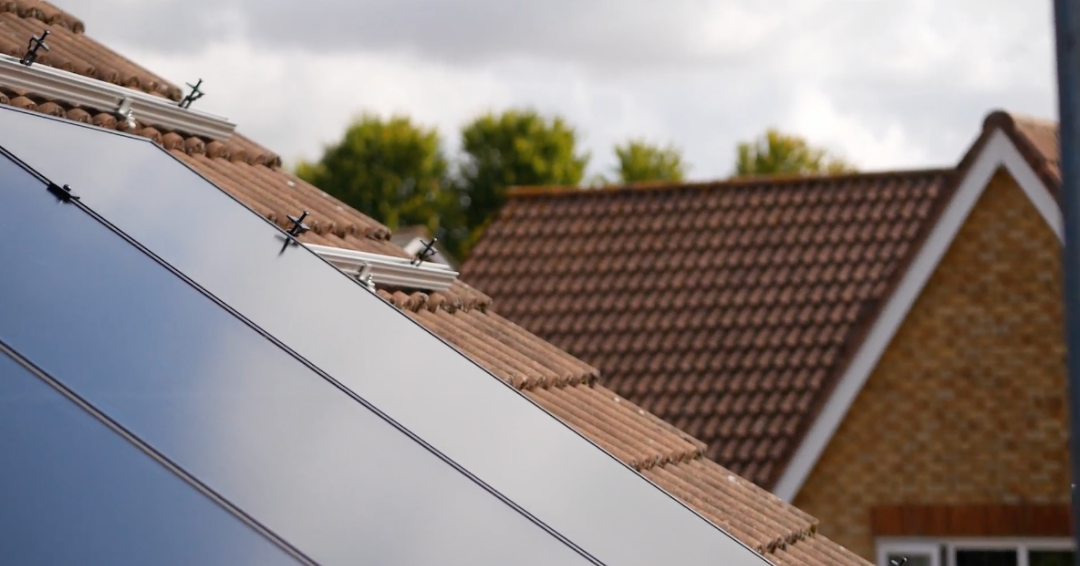
There’s no such thing as a one-size-fits-all system when it comes to solar panel installations. At Evergen, we know that every home is different. Your roof may face a different direction from your neighbours, perhaps you have a few trees creating shade on your roof, or your electricity usage could be completely different from the house next door. That’s exactly why, before we recommend a solar system, we carry out a free full survey of your home.
Our survey gives us the chance to fully understand your property, your roof and how you use electricity in your home. From that point, we create a bespoke solar system designed around your home and your energy needs, rather than simply suggesting a standard package.
So, what is it we exactly look at before designing your system? Let’s take a look.
1. The Orientation of Your Roof
One of the things we’ll look at is the orientation of your roof (in other words, which direction it faces).
But why does roof orientation matter for solar panels? This is important, as the direction your solar panels face affects when they’re likely to generate the most electricity throughout the day. Let’s say, for example, a south-facing roof will often provide strong generation across the day, while east-facing roofs will have peak energy production in the morning and west-facing roofs will produce the most in the afternoon.
It doesn’t mean you can’t have solar panels if your roof isn’t south-facing. In fact, far from it. We’ll simply take the orientation of your roof into account when we design your system, so we have a realistic idea of how your panels are likely to perform.
2. Your Roof Pitch
We also look at the pitch (or angle) of your roof. The angle of your roof can affect how much daylight your panels receive and therefore the amount of electricity they produce.
As part of your survey, we’ll assess the pitch and factor that into your design. It’s another small detail that can make a big difference when you’re trying to get the most from your solar investment.
3. Shading Around Your Property
Shading is something we take seriously when we design a solar system. But how does shading affect solar panel performance?
Things like trees, chimneys, dormer windows and even neighbouring buildings can cast shadows across your roof. Depending on where and when the shading occurs, it can affect solar generation.
When one of our engineers carries out your survey, they’ll take a look at potential sources of shade and consider how they could affect your solar system. This helps us decide where your panels should be positioned and whether any additional design considerations are necessary.
Thinking about solar but not sure how well your roof will perform? Book your free solar consultation and our team will give a full breakdown of how solar could work for you.

4. The Condition and Structure of Your Roof
Before any panels are installed on your rooftop, we need to check if your roof is suitable for solar panels.
We’ll look at things such as the type and age of your roof tiles and the condition of the structure itself. We’ll also take into account factors like rafter spacing and size, as these may affect how the panels and mounting system are installed.
It’s much better to identify any potential issues before installation rather than discovering them halfway through the job. A proper survey with one of our engineers helps us plan your installation properly right from the start.
5. Usable Roof Space
If you’re looking at solar, you may be asking yourself “how many solar panels can I fit on my roof?”
However, the size of your roof doesn’t necessarily tell us how many panels we can fit on your rooftop. Instead, we’ll look at the usable roof area and any obstructions that could get in the way. Vents, valleys, dormers, and other roof features can all affect the available space.
We’ll work out where panels can actually go, and how many we can install, while of course keeping the system practical and effective.
6. How Much Electricity You Use
This is probably the main factor we’ll consider.
There isn’t really much point in designing a solar system without considering how much electricity you actually use. A household with high electricity usage throughout the day will have different requirements compared to a smaller property where most of the electricity is used in the evening.
We’ll look at your electricity usage to understand your energy needs and help determine an appropriate system size. It’s also useful for us to understand if you’re considering adding battery storage, if you own or are considering an electric vehicle, or even thinking of installing a heat pump in the future.
The aim is to design a system tailored to your home, and that works for you, not just one that looks good on paper.
7. Your Existing Electrics and Grid Connection
Your roof isn’t the only thing we need to look at. We’ll also assess your existing electrical setup, including the condition of your consumer unit, available spare ways and your main fuse rating. We’ll also check the earthing arrangement and whether your property has a single-phase or three-phase supply.
We’ll then establish whether the installation can be handled through a G98 notification or whether a G99 application to the Distribution Network Operator (DNO) is required.
Even though this sounds a bit technical, don’t worry, as we’ll handle all of this for you. This information helps us to make sure your proposed system is suitable for your property and grid connection before any installation work begins.
8. Cable Routes and Equipment Location
Finally, we look at the more practical side of the installation: where everything will go, and how we’ll get there.
We’ll need to decide where the inverter and battery will be located, as well as how the cables will get from the panels to your electrical equipment.
We’ll consider cable run lengths, loft access, ventilation and the most sensible route for the cabling. And, importantly, we’ll carefully consider how we can carry out your installation neatly without unnecessarily disturbing your home.
Proper solar designs aren’t just about what goes on the roof. It’s about thinking through the entire system from the panels right through to where the electricity is used.

Why is a Bespoke Solar Panel System So Important?
A bespoke solar system is designed specifically around your home, your roof, and your energy usage.
At Evergen, we don’t just take a standard approach; we look at all the details that could affect your system’s performance and installation. This then allows us to recommend a solution that makes the most sense for your property and also helps you get the utmost value from your investment.
And that really sums up what we look into during your free solar survey. We want to understand your home properly.
Ready to find out what solar could look like for your home?
There’s a lot more to designing a solar system than simply counting how many panels we can fit on your roof.
If you’re considering solar panels and want to know what could work for your property, book your free solar consultation today. We’ll arrange a free survey, talk through your energy needs and design a bespoke system suited to you and your home.

